 University of North Texas


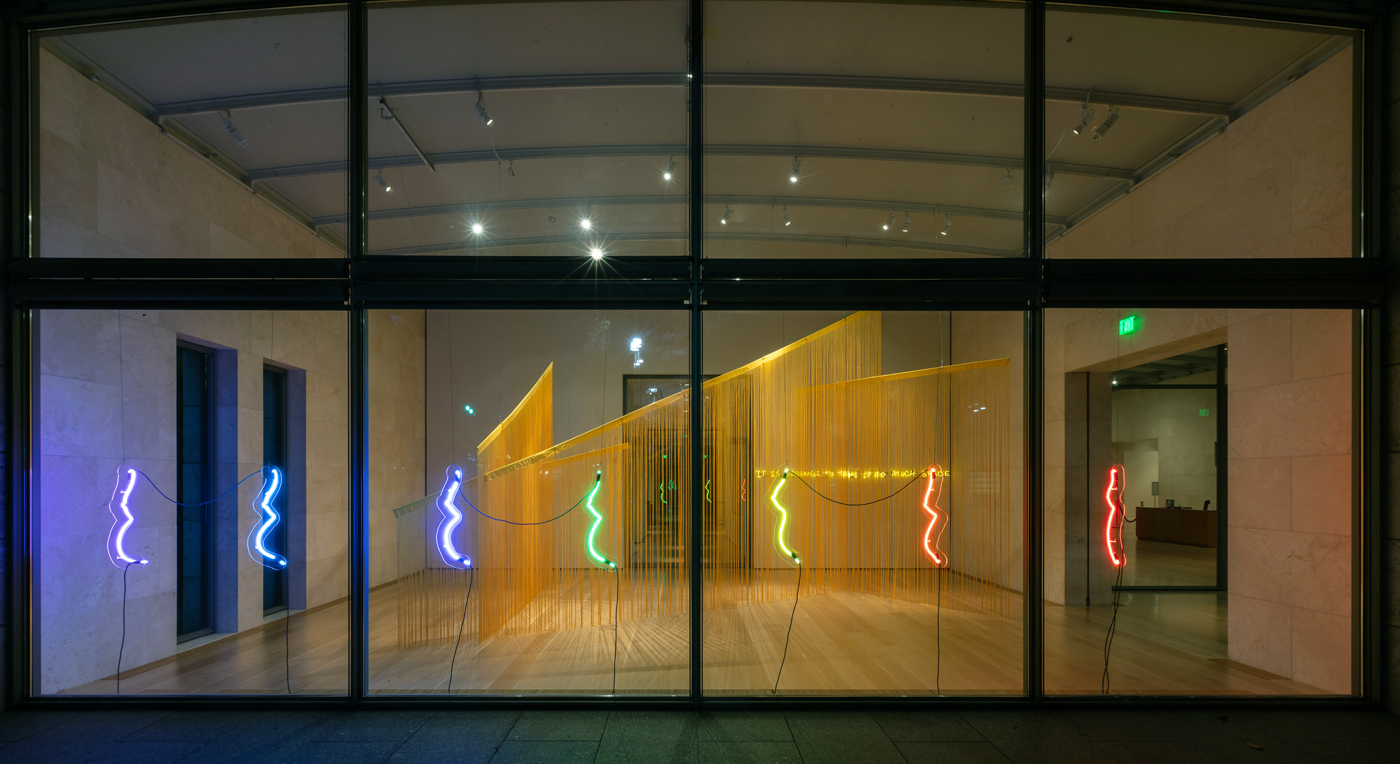 Liss LaFleur, "The Queer Birth Project," installation view featuring “Growing bodies/babies,”
2022, neon sculpture, dimensions variable. Courtesy of the artist.
Liss LaFleur, "The Queer Birth Project," installation view featuring “Growing bodies/babies,”
2022, neon sculpture, dimensions variable. Courtesy of the artist.
Creative Capital Awards National Grant to UNT Faculty for The Queer Birth Project
Jan. 9, 2026 — Creative Capital has awarded a 2026–27 Creative Capital Award to University of North Texas faculty
members Liss LaFleur and Katherine Sobering for their collaborative project, The Queer Birth Project.
 Founded in 1999, the Creative Capital Award is a five-year, $50,000 project-based
grant given directly to artists and scholars, accompanied by sustained non-financial
support including curatorial guidance and institutional partnerships. The 2026–27
awardees will be announced in the Jan. 11, 2026, print edition of "The New York Times."
Headquartered in New York City, Creative Capital is widely recognized for advancing
ambitious, long-term, and experimental work that bridges artistic innovation and scholarly
inquiry.
Founded in 1999, the Creative Capital Award is a five-year, $50,000 project-based
grant given directly to artists and scholars, accompanied by sustained non-financial
support including curatorial guidance and institutional partnerships. The 2026–27
awardees will be announced in the Jan. 11, 2026, print edition of "The New York Times."
Headquartered in New York City, Creative Capital is widely recognized for advancing
ambitious, long-term, and experimental work that bridges artistic innovation and scholarly
inquiry.
Award recipients are selected through a three-round national open-call process emphasizing peer review and democratic selection across disciplines, including technology, performing arts, film, literature and visual arts. Only the top 1% of submissions receive funding.
 LaFleur, M.F.A., is an associate professor of Studio Art: New Media Art in the College
of Visual Arts and Design. A transmedia artist working across glass, installation,
and immersive media, LaFleur’s collaborative, research-driven practice examines queer
embodiment, feminist archives, and care as a practiced form. Sobering, Ph.D., is an
associate professor of sociology in the College of Liberal Arts and Social Sciences
and director of undergraduate studies. An ethnographer and expert in qualitative research
methodology, Sobering’s scholarship examines how inequality is produced and disrupted
in everyday life. Together, LaFleur and Sobering co-developed The Queer Birth Project
as an interdisciplinary initiative that weaves artistic production, sociological research,
and public scholarship together to examine LGBTQIA+ family formation.
LaFleur, M.F.A., is an associate professor of Studio Art: New Media Art in the College
of Visual Arts and Design. A transmedia artist working across glass, installation,
and immersive media, LaFleur’s collaborative, research-driven practice examines queer
embodiment, feminist archives, and care as a practiced form. Sobering, Ph.D., is an
associate professor of sociology in the College of Liberal Arts and Social Sciences
and director of undergraduate studies. An ethnographer and expert in qualitative research
methodology, Sobering’s scholarship examines how inequality is produced and disrupted
in everyday life. Together, LaFleur and Sobering co-developed The Queer Birth Project
as an interdisciplinary initiative that weaves artistic production, sociological research,
and public scholarship together to examine LGBTQIA+ family formation.
The project traces how queer people reconfigure power, negotiate bodily autonomy, and navigate medical and social institutions as they form families and have children. Sobering leads the project’s research design, participant interviews, and theoretical framework, grounding the work in rigorous qualitative methodology and reproductive justice scholarship. LaFleur leads the project’s translation of these narratives into immersive artworks that make lived experience legible through sound, installation, and visual form.
 At its core, The Queer Birth Project gathers and broadly shares the experiences of
LGBTQIA+ childbirth and family-building, blending research, art, and activism to challenge
dominant narratives of belonging and kinship. Through a process jointly designed by
LaFleur and Sobering, stories from 150 queer parents across the United States are
translated into works that reflect the everyday joy, creativity, and complexity of
building queer families.
At its core, The Queer Birth Project gathers and broadly shares the experiences of
LGBTQIA+ childbirth and family-building, blending research, art, and activism to challenge
dominant narratives of belonging and kinship. Through a process jointly designed by
LaFleur and Sobering, stories from 150 queer parents across the United States are
translated into works that reflect the everyday joy, creativity, and complexity of
building queer families.
Organized into six thematic collections — on bodies, identities, family, loss, feeding, and birth — the project unfolds through modular installations. Each collection is anchored by a libretto: a long-form poetic text composed from participants’ narratives and produced as a six-part studio album. These texts are performed as atmospheric soundscapes that amplify participants’ voices through digital distortion, creating a shared, collective listening experience.
Soundscapes are paired with artworks that intervene in conventional artistic media, including neon sculptures that visualize queer vocabularies, textiles that unravel into fringe, and mixed-media installations that expand representation and shift perspective. Together, these elements form intimate, multisensory environments that invite audiences to engage with the emotional and embodied dimensions of queer family-making.
Central to the project is a research process grounded in ethical qualitative practice, including informed consent, participant agency, and long-term stewardship of shared narratives. Sobering’s analysis situates these reproductive histories within broader frameworks of inequality, care work, and institutional power, ensuring the project contributes meaningfully to scholarship in sociology, gender studies, and family research while remaining accessible to public audiences.
The project will culminate in a series of exhibitions alongside a co-authored scholarly book and a digital video game-as-archive designed for long-term access. Together, these outcomes offer multiple points of engagement for scholars, artists, students, and community members. At a time when reproductive and LGBTQIA+ rights face increasing challenges, The Queer Birth Project affirms that reproductive justice requires imagination, creativity, and care, envisioning childbirth and kinship as expansive, experimental, and future-oriented.
The first two collections in the six-part series were completed prior to the award, including an inaugural solo exhibition at the Nasher Sculpture Center in 2022. Creative Capital funding will support the production of the remaining works, including immersive soundscapes and neon sculptures produced in collaboration with Lite Brite Neon in New York.
In addition to completing the project and co-authoring a book, LaFleur and Sobering are collaborating with the Smithsonian Institution on a new series, Artistic Lines: Artists and Parenthood, scheduled for release Jan. 30, 2026.
Founded in 1999, the Creative Capital Award is a five-year, $50,000 project-based
grant given directly to artists and scholars, accompanied by sustained non-financial
support including curatorial guidance and institutional partnerships. The 2026–27
awardees will be announced in the Jan. 11, 2026, print edition of "The New York Times."
Headquartered in New York City, Creative Capital is widely recognized for advancing
ambitious, long-term, and experimental work that bridges artistic innovation and scholarly
inquiry.Award recipients are selected through a three-round national open-call process emphasizing peer review and democratic selection across disciplines, including technology, performing arts, film, literature and visual arts. Only the top 1% of submissions receive funding.
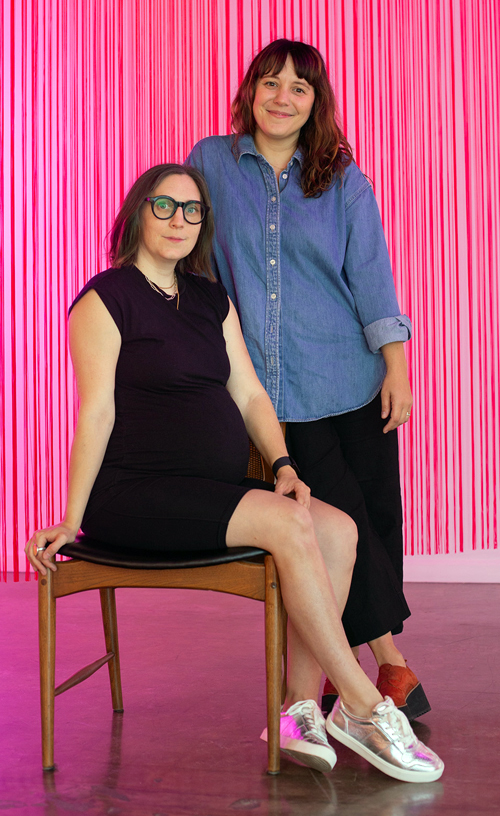
Liss LaFleur, seated, and Katherine Sobering.
The project traces how queer people reconfigure power, negotiate bodily autonomy, and navigate medical and social institutions as they form families and have children. Sobering leads the project’s research design, participant interviews, and theoretical framework, grounding the work in rigorous qualitative methodology and reproductive justice scholarship. LaFleur leads the project’s translation of these narratives into immersive artworks that make lived experience legible through sound, installation, and visual form.
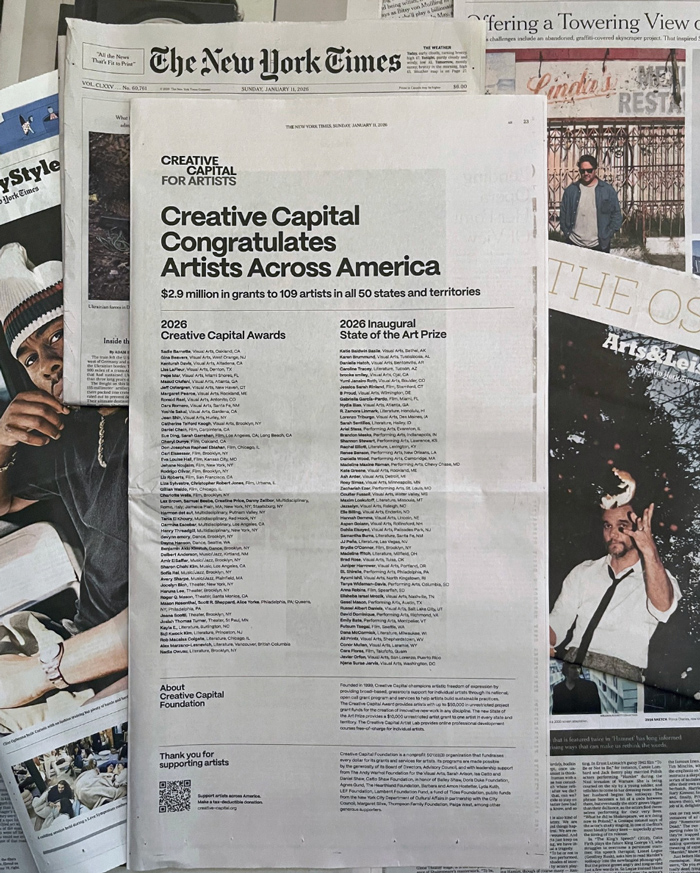
The New York Times announces the 2026 Creative Capital Awardees and inaugural State
of the Art Prize Artists in the Jan. 11, 2026, Arts & Leisure section.
Organized into six thematic collections — on bodies, identities, family, loss, feeding, and birth — the project unfolds through modular installations. Each collection is anchored by a libretto: a long-form poetic text composed from participants’ narratives and produced as a six-part studio album. These texts are performed as atmospheric soundscapes that amplify participants’ voices through digital distortion, creating a shared, collective listening experience.
Soundscapes are paired with artworks that intervene in conventional artistic media, including neon sculptures that visualize queer vocabularies, textiles that unravel into fringe, and mixed-media installations that expand representation and shift perspective. Together, these elements form intimate, multisensory environments that invite audiences to engage with the emotional and embodied dimensions of queer family-making.
Central to the project is a research process grounded in ethical qualitative practice, including informed consent, participant agency, and long-term stewardship of shared narratives. Sobering’s analysis situates these reproductive histories within broader frameworks of inequality, care work, and institutional power, ensuring the project contributes meaningfully to scholarship in sociology, gender studies, and family research while remaining accessible to public audiences.
The project will culminate in a series of exhibitions alongside a co-authored scholarly book and a digital video game-as-archive designed for long-term access. Together, these outcomes offer multiple points of engagement for scholars, artists, students, and community members. At a time when reproductive and LGBTQIA+ rights face increasing challenges, The Queer Birth Project affirms that reproductive justice requires imagination, creativity, and care, envisioning childbirth and kinship as expansive, experimental, and future-oriented.
The first two collections in the six-part series were completed prior to the award, including an inaugural solo exhibition at the Nasher Sculpture Center in 2022. Creative Capital funding will support the production of the remaining works, including immersive soundscapes and neon sculptures produced in collaboration with Lite Brite Neon in New York.
In addition to completing the project and co-authoring a book, LaFleur and Sobering are collaborating with the Smithsonian Institution on a new series, Artistic Lines: Artists and Parenthood, scheduled for release Jan. 30, 2026.
For more information, email Liss LaFleur, Liss.LaFleur@unt.edu, and Katherine Sobering, Katherine.Sobering@unt.edu.
Special Event
Archives of American Art Spotlights Queer Birth Project and Artists + Parenthood
LaFleur and Sobering appear as panelists in the Smithsonian's webinar, January Programs at the Archives of American Art, which highlights innovative explorations of activism and parenthood through archival
and artistic lenses. Among the featured events is a pre-recorded webinar titled Artistic Lines: Artists and Parenthood scheduled for Jan. 30 at 3 p.m. ET, presented in collaboration with the National Museum of American History. The program
brings together artists and researchers investigating how parenthood shapes creative
practice and lived experience.
The Smithsonian program brings archival collections and contemporary voices into dialogue,
emphasizing how artistic and research practices can deepen our understanding of community,
identity, and parenthood.